
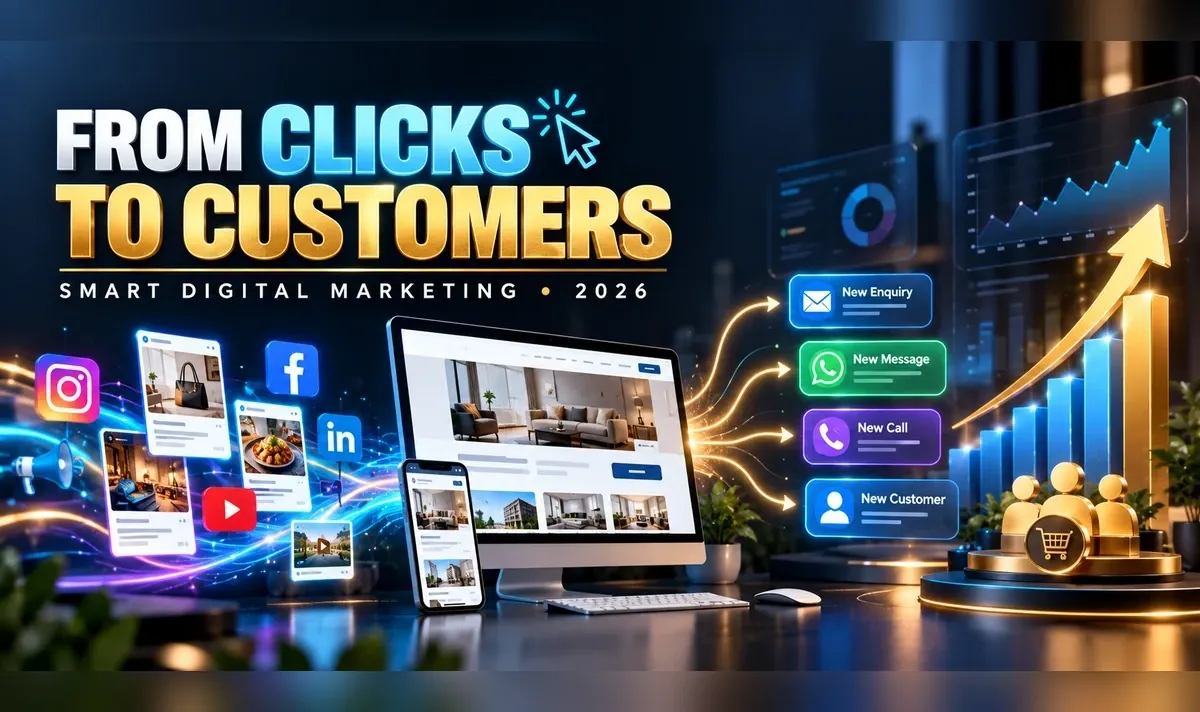
Your business doesn’t need more random clicks. It needs the right customers.
Every day, people discover new businesses through Google, Instagram, Facebook, YouTube, and other digital platforms. They browse websites, compare services, read customer reviews, and evaluate brands before making purchasing decisions.
But here’s the challenge: Getting noticed online doesn’t automatically mean getting more customers.
A business might receive thousands of social media views without generating a single enquiry. Another business might have an attractive website but struggle to convert visitors into paying customers.
The difference often comes down to having a well-planned digital marketing strategy.
In 2026, successful digital marketing for small businesses is about connecting the right audience with the right message, building trust, and encouraging meaningful action.
Let’s explore how businesses can turn online attention into real growth.
What Is Digital Marketing, and Why Does Your Business Need It?
Digital marketing is the process of promoting a business, product, or service using online channels such as websites, search engines, social media, email, and paid advertising.
Unlike traditional advertising, many digital marketing activities allow businesses to reach specific audiences, measure engagement, and improve their campaigns based on performance.
Whether you’re launching a startup, managing a local service business, running an e-commerce store, or growing a real estate company, digital marketing can help you connect with potential customers throughout their buying journey.
Benefits of Digital Marketing for Small Businesses
- Reach the right audience: Connect with people who may need your products or services.
- Increase brand awareness: Introduce your business to potential customers across relevant digital platforms.
- Build credibility: Establish trust through professional content, authentic reviews, and a consistent online presence.
- Generate enquiries: Encourage website visitors and social media audiences to contact your business.
- Measure performance: Understand which activities contribute to engagement, leads, and sales.
- Grow strategically: Make informed marketing decisions based on business objectives and available data.
The goal isn’t simply to be visible everywhere. It’s to be visible where your customers are.


